The Logophoros Library
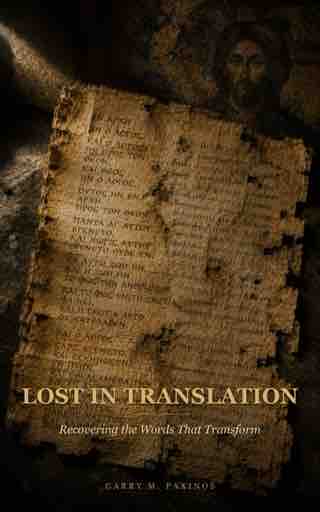
Lost in Translation
Recovering the Words That Transform
Nine biblical words have been systematically flattened by centuries of English translation. Get the words wrong, and you get the vision wrong. Get the vision wrong, and the practice follows.
Introduction · The Words We Never Heard
The list kept growing.
It started with metanoia. I learned that "repent" didn't mean "feel sorry"—it meant "change your entire mind." That was interesting. A footnote worth filing away.
Then hamartia. "Sin" wasn't primarily moral failure but missing the mark. An archery term. That changed things more.
Then pistis. "Faith" wasn't believing doctrines but living in trust. Then yirah—"fear of the Lord" was awe, not terror. Then rachamim—"mercy" wasn't judicial leniency but deep compassion, the fierce love of a parent for a child.
The list kept growing. And somewhere around the fifth or sixth word, I realized I wasn't collecting interesting footnotes. I was watching a pattern emerge. These weren't isolated mistranslations. They were a systematic distortion of the entire arc of spiritual transformation.
One word wrong is a problem. Nine words wrong and counting — nine that together trace the path from recognition to glory — that's not a problem. That's a deformation. We have been practising a mistranslated faith.
I couldn't keep the list to myself anymore. It was time to put a stake in the ground.
This book is that stake.
But before we recover the words, we need to understand how we lost them. And that starts with an uncomfortable fact: we have been reading a translation of a translation.
This isn't a criticism, and it isn't an accusation aimed at anyone. It is simply our situation. Unless we read biblical Hebrew and Koine Greek fluently, we meet Scripture through layers of interpretation already baked into the words. Every translation is a choice. Every choice carries consequences, and we inherit all of them.
Some of those consequences are small. Whether we read "donkey" or "ass" changes little. But other choices reshape entire theologies. They determine what we think we are supposed to do, how we think we are supposed to relate to God, what we take the goal of the spiritual life to be.
What's at Stake
Consider the word "sin."
In English, sin evokes moral transgression. Breaking rules. Doing bad things. The word carries guilt, shame, and the need for forgiveness. When we hear "sinner," we picture someone who has done wrong, violated laws, offended God through bad behaviour.
The Greek word ἁμαρτία (hamartia) means something different. It's an archery term. It means missing the mark, falling short of the target. The emphasis isn't on rule-breaking but on aim. The arrow flew; it landed somewhere other than where it was sent. The problem isn't primarily moral failure but directional error.
The Hebrew חָטָא (chata) carries similar weight. It means going astray, wandering from the path, failing to reach the destination.
The distance between those two pictures is the distance this book is about.
In the English framework, sin is about guilt, and the solution is forgiveness — absolution, the slate wiped clean. In the Greek and Hebrew framework, sin is about aim, and the solution is reorientation — getting back on course, aiming true.
Both are real. But they produce different forms of spiritual life. The guilt framework produces confession and absolution. The aim framework produces μετάνοια (metanoia)—another word we will need to recover — the total reorientation of how we see and move through reality.
Get the words wrong, and we get the vision wrong. Get the vision wrong, and our practice follows it down.
How This Happened
Translation is never neutral. Every translator faces impossible choices.
The King James translators in 1611 made choices that shaped English-speaking Christianity for four centuries. Many were brilliant. Some were limited by what they knew. A few were simply wrong.
This isn't a conspiracy. It's how language works across time. Words shift. Meanings narrow or expand. What was once a technical term becomes a vague generality. What carried precise theological freight becomes religious wallpaper.
The result is that we meet the Bible through a fog of accumulated mistranslation. We read the words. We do not receive what the words originally meant.
What This Book Does
This book recovers nine of these words. Nine terms that make a difference — not just for scholarly accuracy but for how you actually live.
Each chapter takes a familiar English word, shows what was lost when the Greek or Hebrew was carried across, and then traces the consequences: what changes in your understanding, and what changes in your practice.
The pattern is always the same: vision shapes being. What we behold, we become. But when our vision is distorted by bad translation, our becoming is distorted with it.
The Words We'll Recover
Sin. Not moral transgression but missing the mark. The shift from guilt to aim changes everything about how you address what has gone wrong in your life.
Repentance. Not feeling sorry but changing your mind. Metanoia is a revolution in perception, not an emotion.
Fear of the Lord. Not terror but awe. יִרְאָה (yirah) is the difference between cowering before a tyrant and standing in wonder before mystery.
Charity. Not giving to the poor but participating in divine love. ἀγάπη (agape) isn't philanthropy; it's theosis in action.
Mercy. Not pity from above but deep compassion. רַחֲמִים (rachamim) is visceral identification, not condescending leniency.
Faith. Not believing doctrines but living in trust. πίστις (pistis) is relational, not intellectual.
Righteousness. Not moral perfection but right relationship. δικαιοσύνη (dikaiosyne) and צְדָקָה (tsedakah) are about covenant faithfulness, not sinlessness.
Remembrance. Not mental recall but making present. ἀνάμνησις (anamnesis) is participation, not memory.
Glory. Not brightness but weight. כָּבוֹד (kavod) is presence, not appearance.
Nine words. Nine recoveries. Each one opens space for a transformation the English word had quietly closed.
The Divine Economy
One more word deserves mention, though it won't get its own chapter. The Greeks called it οἰκονομία (oikonomia)—from oikos (house) and nomos (law, management). Household management. The wise arrangement of a home.
In theological usage, oikonomia came to mean something grander: God's plan, the divine arrangement of salvation history, the purposeful unfolding of redemption across time. The Incarnation was the central act of the divine oikonomia. The Church's pastoral wisdom in applying its rules was also oikonomia—knowing when and how to accommodate human weakness without abandoning the goal.
English reduced this to "economy"—markets, money, efficiency. We kept the management and lost the household. We kept the arrangement and lost the purpose. What was once the name for God's master plan became the name for financial transactions.
Why mention it here? Because the nine words in this book aren't random. They follow a sequence. And that sequence traces the oikonomia of transformation — the divine pattern by which souls are formed. We will see this more clearly by the final chapter. For now, just notice: the order matters. There is a plan.
How to Read This Book
You could read straight through. The chapters build on each other, and the cumulative effect is greater than any single recovery.
Or start with the word that puzzles you most, the one that has never quite made sense. Let that chapter be the entry point, and work outward from it.
Either way, don't just read. Let the recovered meaning sit with you. Notice where it presses against an assumption you didn't know you were carrying. Pay attention to how it might change not only your thinking but your doing.
Every chapter ends with a brief practice, a way to begin living the recovery. These aren't optional additions. They're the point. A word you recover and never practise has been recovered in vain.
The goal isn't knowledge for its own sake. The goal is transformation.
If you want more ground beneath you, the Appendix has it: notes on etymology, translation history, and resources for further study. The main text stays walkable; the notes are there when you want to dig.
Let's begin.
In the beginning was the Word.
John 1:1
Contents
- — Introduction: The Words We Never Heard
- 1 The Translation Trap
- 2 How Words Shape Practice
- 3 Sin hamartia — missing the mark, not breaking a rule.
- 4 Repentance metanoia — changing your mind, not feeling sorry.
- 5 Fear of the Lord yirah — awe, not terror.
- 6 Charity agape — divine love participated, not philanthropy.
- 7 Mercy rachamim — compassion from the depths, not leniency.
- 8 Faith pistis — trust, not assent.
- 9 Righteousness dikaiosyne — right relationship, not moral perfection.
- 10 Remembrance anamnesis — making present, not recalling.
- 11 Glory kavod — weight, not brightness.
- 12 Reading Scripture with New Eyes
- 13 The Invitation
- — Appendix: Notes and Reading Guide
The rest is coming soon
Nine words recovered, and the arc of transformation they trace. Subscribe for word studies, chapter previews, and word when the book is released.
Subscribe on Substack